
Warehouse Logistics Explained: How Kent Distribution Centers Move Freight
Warehouse logistics is the system that receives, stores, picks, and ships freight through a distribution center. Learn how it works in the Kent Valley and what makes it efficient.
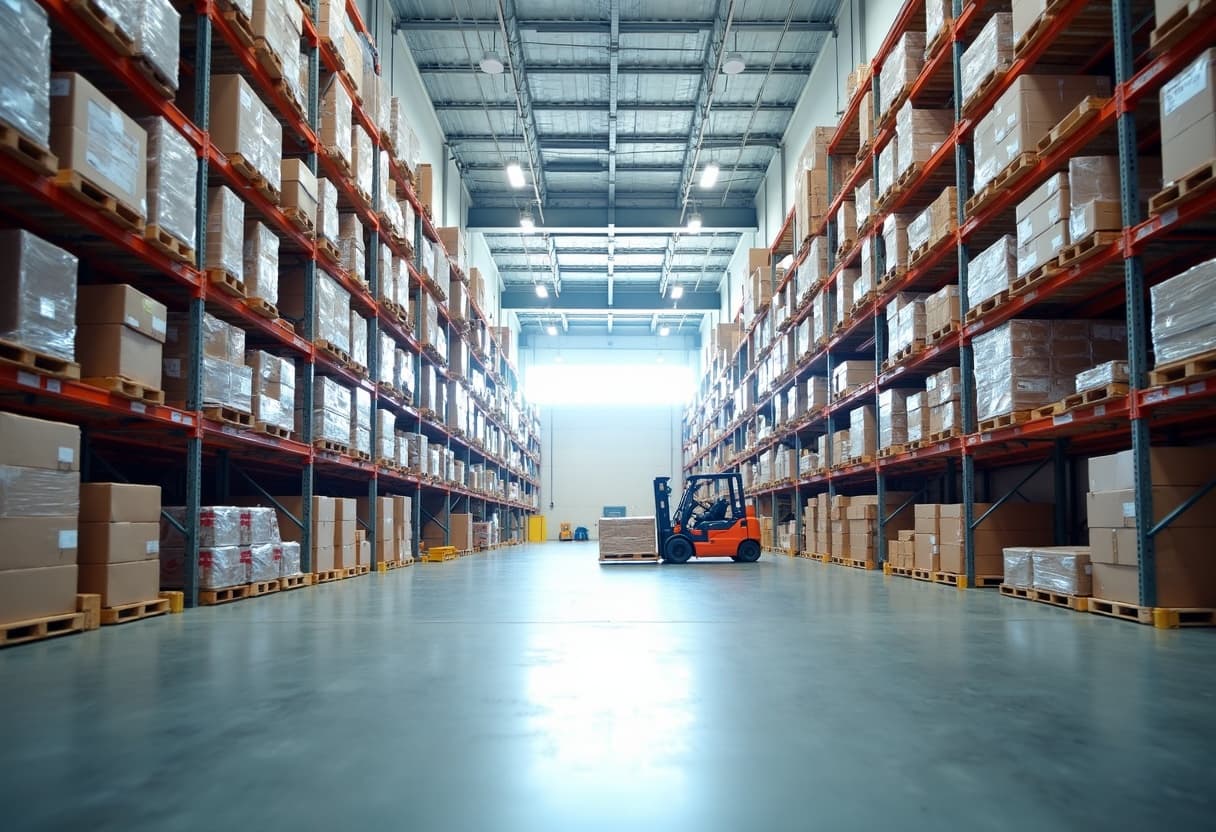
Freight does not just sit in a building. The moment a container is unloaded at a distribution center dock, a sequence of decisions begins: where does this pallet go, how long does it stay, when is it needed, and how does it leave. That sequence — receiving, putaway, storage, picking, and shipping — is warehouse logistics, and it is the system that turns a building full of freight into a functioning distribution operation.
All Season Warehouse runs a CTPAT-secured distribution facility in the Kent Valley. This guide explains how warehouse logistics works inside a Kent distribution center, the services that make it efficient, and why the valley's geography gives freight moving through it a cost advantage.
What warehouse logistics actually covers
Warehouse logistics is the set of processes that move freight through a distribution center from inbound to outbound. It is not just storage — storage is one stage. A functioning warehouse logistics operation includes:
- Receiving — checking in inbound freight against the bill of lading, inspecting for damage, and confirming count and condition.
- Putaway — moving received freight to its assigned storage location, whether that is a racked pallet position, a floor stack, or a bin.
- Storage and inventory management — holding freight under the right conditions (ambient, climate-controlled, food-grade, hazmat) and keeping an accurate count of what is where.
- Picking — pulling the right items from storage when a customer order arrives.
- Packing and value-added services — labeling, kitting, repalletizing, shrink-wrapping, and in some cases light assembly.
- Shipping — staging outbound freight, loading it onto the right trailer, and closing out the shipment with documentation.
A distribution center that handles all of these well moves freight through quickly and accurately. One that handles them poorly loses inventory, misses ship dates, and racks up accessorial charges on both the inbound and outbound sides.
How freight moves through a Kent distribution center
In the Kent Valley, most distribution centers are built around ocean container imports. A typical flow looks like this:
- Drayage in. A drayage truck pulls a 40-foot import container off Terminal 18 at the Port of Seattle or Husky Terminal at the Port of Tacoma and delivers it to the warehouse dock.
- Receive and unload. Warehouse staff unload the container — either by pallet jack, forklift, or devanning floor-loaded cartons — and verify the count against the bill of lading.
- Decision: store or cross-dock. Freight that needs to keep moving goes straight to an outbound trailer (cross-docking). Freight that needs holding goes into racked storage.
- Storage and inventory accuracy. Pallets are slotted into their locations, the warehouse management system records where they are, and the inventory count stays accurate.
- Order fulfillment. When a customer order drops, staff pick the items from storage, repack them if needed, and stage them for outbound shipping.
- Outbound shipping. Freight is loaded onto a domestic trailer and dispatched to its final destination — a retailer, a manufacturer, a fulfillment center, or a direct customer.
The speed and accuracy of that flow is what separates a distribution center that adds value from one that just adds cost.
The value-added services that define modern warehouse logistics
A distribution center in the Kent Valley rarely just stores pallets. Modern warehouse logistics bundles value-added services that let importers avoid moving freight twice:
- Transloading — transferring freight from an ocean container into a domestic trailer, so the customer pays domestic LTL or FTL rates for the inland leg instead of higher ocean-container drayage rates.
- Cross-docking — unloading inbound freight and loading it directly onto an outbound trailer with little to no storage time, for freight that needs to keep moving.
- Container Freight Station (CFS) services — deconsolidating less-than-containerload (LCL) shipments, sorting them by consignee, and preparing them for individual delivery.
- Pick and pack — breaking down bulk pallets into individual order quantities for fulfillment.
- Inventory management and reporting — maintaining accurate stock counts and giving the customer visibility into what is on hand.
When a warehouse offers all of these, an importer can land a container, devan it, transload the freight, store any overflow, and fulfill orders out of one facility — without paying a separate drayage move to a second building.
Why the Kent Valley is a freight logistics hub
The Kent Valley — running through Kent, Auburn, Renton, and Tukwila — holds one of the densest concentrations of warehouse and distribution space in Washington state. The reason is geography. The valley sits between the Port of Seattle and the Port of Tacoma, with direct access to I-5, I-405, and SR-167. For a distribution center, that means:
- Low drayage cost. A drayage move from either port to a Kent facility is short — typically under 50 miles — which keeps the most expensive per-mile leg of the supply chain cheap.
- Fast outbound access. Outbound trailers leaving a Kent dock can reach Seattle, Tacoma, Bellevue, and the broader Puget Sound metro within an hour, and the I-5 corridor north to the Canadian border or south to Portland within a few hours.
- Rail and intermodal proximity. The valley's distribution centers sit near the rail ramps that handle intermodal container moves, which matters for freight moving beyond the immediate region.
That combination is why national retailers, importers, and 3PLs concentrate distribution space in the Kent Valley. A warehouse located here does not just store freight — it positions it for the cheapest, fastest onward move.
What to look for in a warehouse logistics partner
When you evaluate a distribution center in the Kent Valley, the building matters less than the operation inside it. Look for:
- Inventory accuracy — can they tell you, today, exactly what is on hand and where? A warehouse that cannot maintain count accuracy will lose your freight.
- Receiving discipline — do they inspect and count on the dock, or do they sign and figure it out later? The former catches shortages before they become your problem.
- Value-added services in one facility — transloading, cross-docking, pick-and-pack, and CFS under one roof means you pay one drayage move instead of two.
- Security and compliance — CTPAT certification, food-grade handling capability if you need it, and proper hazmat procedures if your freight requires them.
- Reporting and visibility — inventory reports, receiving confirmations, and outbound shipment documentation delivered without you having to chase them.
All Season Warehouse operates a CTPAT-secured facility in the Kent Valley with transloading, cross-docking, storage, and pick-and-pack capabilities. If you are importing through Seattle or Tacoma and need a distribution center that can receive, store, and ship your freight under one roof, contact All Season Warehouse for a same-day quote.
The takeaway
Warehouse logistics is the system that moves freight through a distribution center — and in the Kent Valley, geography turns that system into a cost advantage. A container that drays a short distance from port to a Kent dock, gets devanned and transloaded in one facility, and ships out on a domestic trailer with fast interstate access is a container that moved through the supply chain at the lowest practical cost. That is what a well-run distribution center in this market delivers.
Frequently asked questions
What is warehouse logistics?+
Warehouse logistics is the set of processes that move freight through a distribution center — receiving inbound freight, putting it away into storage, picking it when an order arrives, and shipping it out. It covers inventory management, slotting, order fulfillment, and the labor and systems that coordinate them. In a Kent Valley distribution center, warehouse logistics also includes value-added services like transloading and cross-docking.
How does a distribution center in the Kent Valley move freight?+
A Kent Valley distribution center receives ocean containers or domestic trailers at its docks, unloads them, and either stores the freight in racked inventory or cross-docks it directly onto an outbound truck. When a customer order arrives, staff pick the items from their storage locations, pack them, and load them onto outbound trailers for delivery across the Puget Sound region and beyond.
What is the difference between warehousing and warehouse logistics?+
Warehousing is the storage of freight — holding inventory in a building until it is needed. Warehouse logistics is the broader system that includes storage but also receiving, putaway, picking, packing, shipping, inventory accuracy, and value-added services like transloading. A warehouse without logistics is a shed with freight in it; warehouse logistics is what turns that building into a functioning distribution operation.
Why is the Kent Valley a strong location for warehouse logistics?+
The Kent Valley sits between the Port of Seattle and the Port of Tacoma with direct access to I-5, I-405, and SR-167. That geography keeps drayage costs from the ports low and gives outbound trucks fast access to the Seattle metro, the Pacific Northwest rail network, and north-south interstate freight lanes. It is why the valley holds one of the densest concentrations of distribution space in Washington state.